Your ancestor was “born in Hessen-Darmstadt.” Here is how to find the village.
An American record that names only a German state is not a dead end. It is the first clue. Here is what the old state names meant, which records most often name the village, and how to keep from following the wrong family.
By Heimwyn · For family historians with a German brick wall in the 1800s
The starting point
What most families have
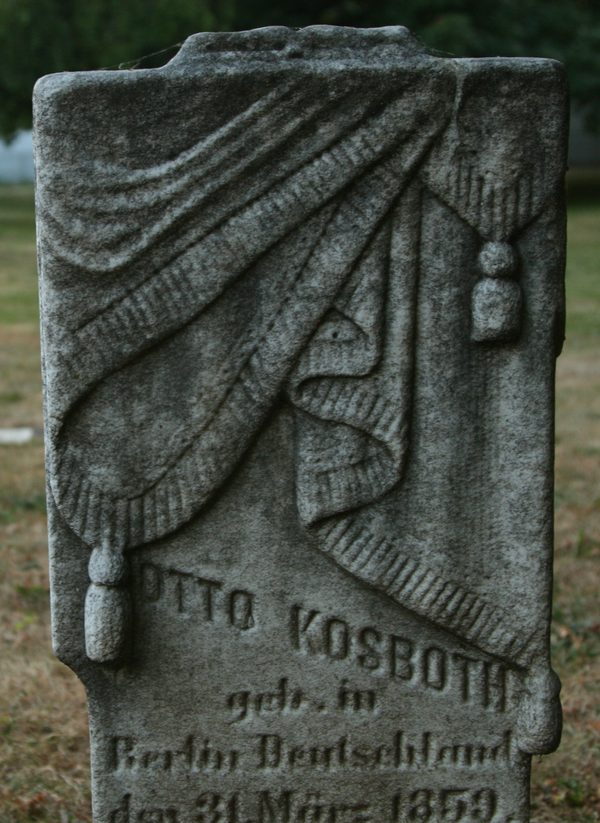
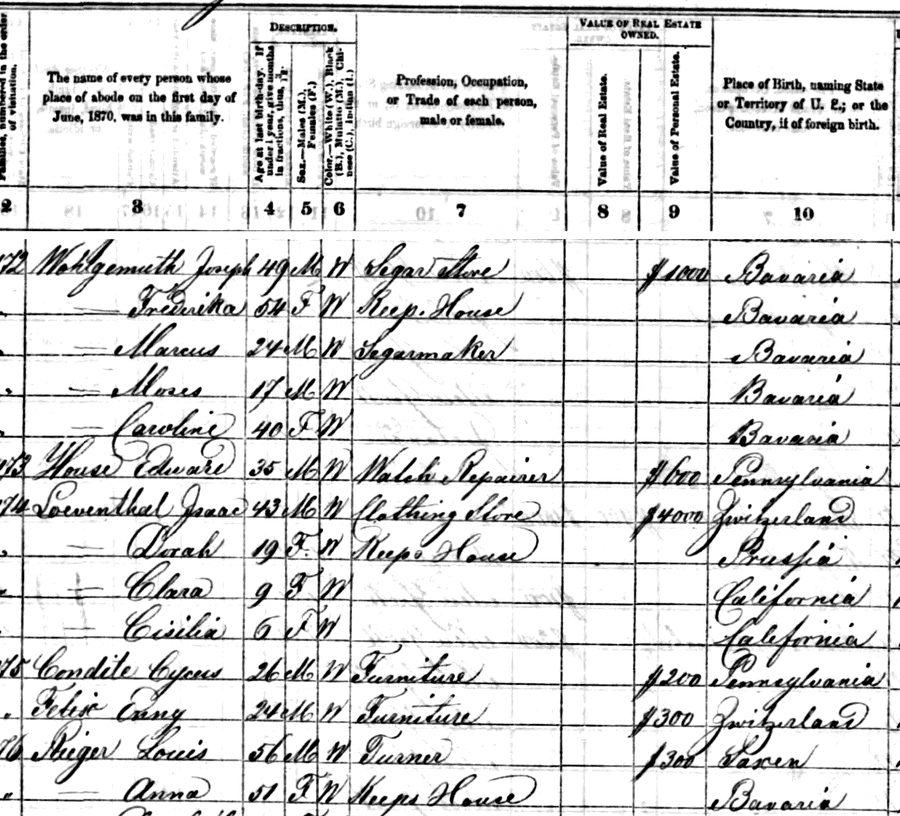
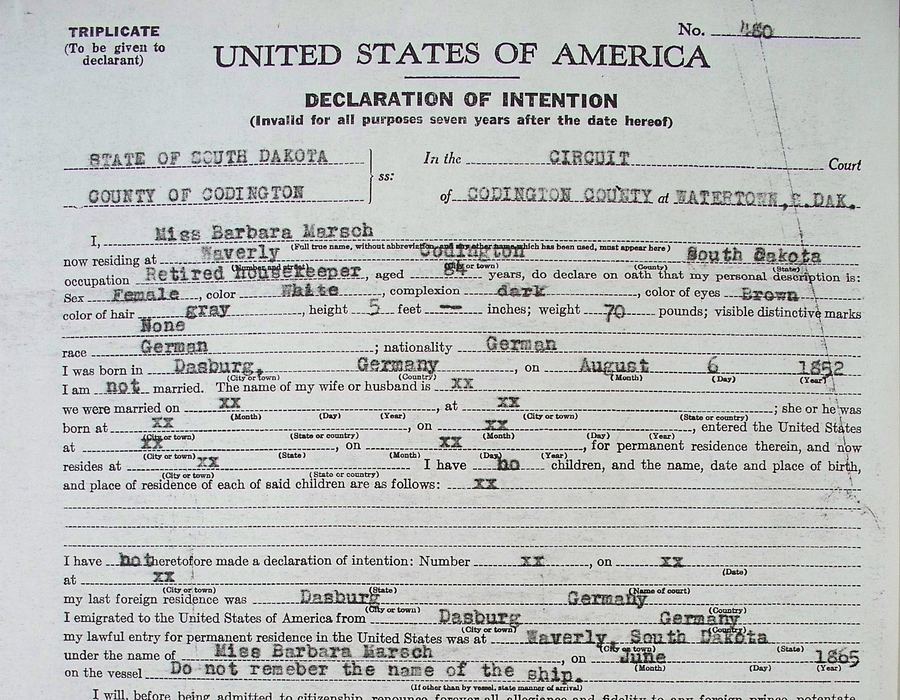
Most searches start with a handful of papers: a gravestone, a census line, a naturalization paper, an obituary, a photograph. Here are three typical ones, and what each says about where the ancestor was born.
Two of these three name a place – more luck than most families have. Usually the papers say “Germany” or a state, and the village still has to be found. That is where the research starts.
Each was written by someone else – a stone carver, a census taker, a court clerk – and records only what that person asked or heard. That is why one family can hold three different answers.
three hands, three answers
The good news: a state name is a real clue. It narrows the search from all of Germany to one region, and it tells you which archives to open.
Before 1871 there was no Germany
The German Confederation of 1815 joined 39 sovereign states: kingdoms such as Prussia, Bavaria and Hanover, grand duchies such as Baden and Hesse, and a long list of duchies, principalities and free cities. Each had its own ruler, laws and borders.
Emigrants named the state they had left. The 1870 census even told its enumerators: “Instead of ‘Germany’ specify the State, as Prussia, Baden, Bavaria, Württemberg, Hesse Darmstadt.” After the Empire was founded in 1871, many of the same people simply said “Germany.” Neither answer is wrong.
the census asked for it
Some names hide surprises. “Bavaria” can mean the Palatinate west of the Rhine, Bavarian from 1816. “Prussia” can mean anywhere from the Rhineland to East Prussia. And clerks spelled what they heard.
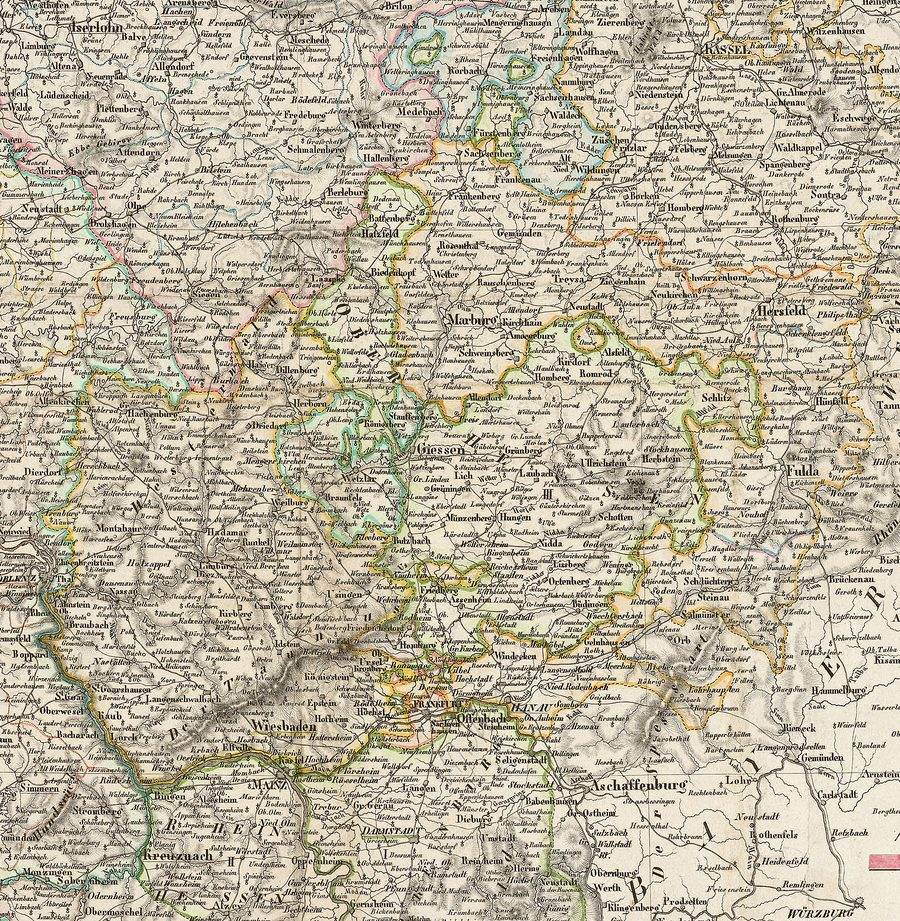
One corner of Germany on a map of 1835: the colored lines are state borders.4
Three Hesses, not one
Before 1866 the region had three main states: the Grand Duchy of Hesse – Hesse-Darmstadt to Americans – with its capital at Darmstadt; the Electorate of Hesse (Hesse-Kassel), around Kassel, Marburg, Fulda and Hanau; and the Duchy of Nassau, around Wiesbaden. The free city of Frankfurt and tiny Hesse-Homburg lay in between.
The Grand Duchy came in two pieces: Upper Hesse around Giessen, and Starkenburg and Rhenish Hesse around Darmstadt, Mainz and Worms. Giessen and Marburg are only about 20 miles apart, yet they lay in different states with different archives.
20 miles, two states
In 1866 Prussia annexed Hesse-Kassel, Nassau and Frankfurt; from 1868 they formed the Prussian province of Hesse-Nassau. The Grand Duchy survived but had to give up its northern “Hinterland” around Biedenkopf. A man born there in the 1840s was born in Hesse-Darmstadt, yet his obituary may call his village Prussian.
Today’s state of Hesse matches none of them: Rhenish Hesse now belongs to Rhineland-Palatinate. Take the state name seriously, but not literally – some Americans said “Hessen-Darmstadt” for any part of Hesse.
The records most likely to name the village
The village is usually written down somewhere in America – by the family or their church, rarely by a clerk who only needed the country.
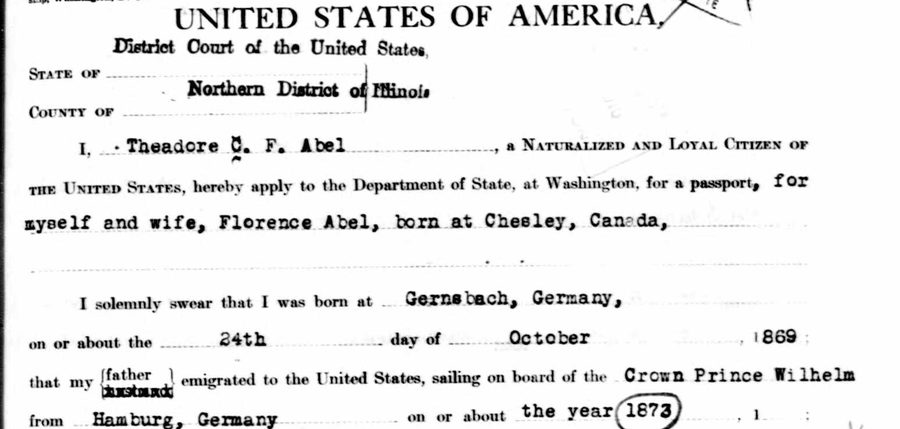
“I solemnly swear that I was born at Gernsbach, Germany.” A US passport application, 1916 (detail).5
Church records of German congregations: marriages, confirmations, burials. Many pastors were immigrants and knew “Hesse” was not an answer.
Obituaries, especially in German-language and small local papers.
Naturalization papers. Before the 1906 reform, a declaration usually renounces a ruler – “the Grand Duke of Hesse” – which confirms the state. Later forms ask for the town.
Passport applications, which ask for the place of birth.
Family papers: Bibles, letters, confirmation certificates, photographs with a German studio’s name on the back.
Hamburg departure lists, which survive from 1850 and often give the last residence. Most Bremen lists were destroyed.
later forms ask the town
Check every family member, not only your ancestor. A sister’s obituary may name the place he never mentioned.
Follow the people who came with them
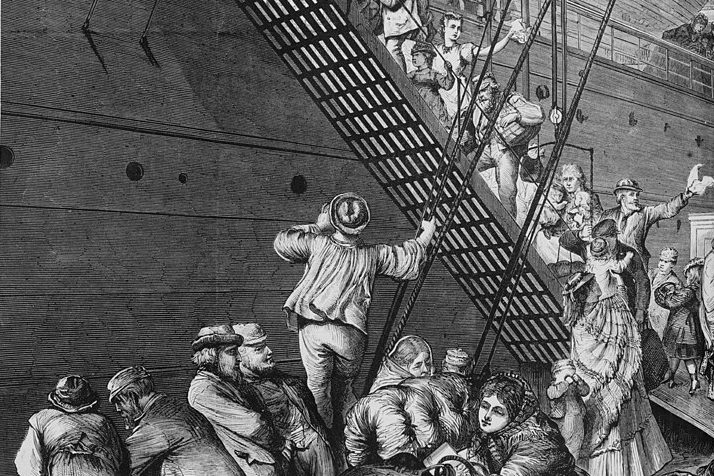
Few people emigrated alone. Brothers followed brothers, and neighbors from one village often settled near each other in America.
Write down everyone around your ancestor: godparents, wedding witnesses, neighbors on the census page, the families next to them on the passenger list. If one of them has a record that names a village, look for your family in that parish too.
their village may be yours
Very often the answer to a brick wall is in someone else’s obituary.
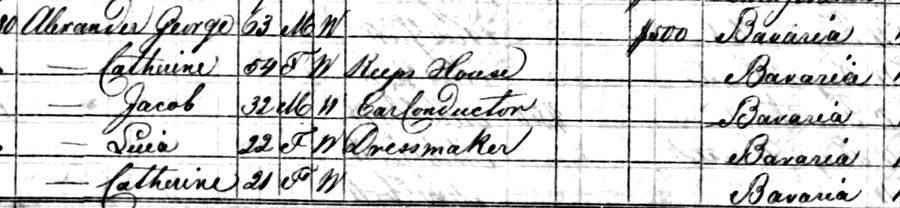
Villages were small and first names few: Johann, Georg, Heinrich, Konrad; Anna Maria, Catharina, Elisabeth. Many people went by their second name, so Johann Georg was simply Georg – and George in America.
Two Catharines in one household, both born in “Bavaria.” New York, 1870.2
two Catharines, one house!
German records are kept by parish, so the village decides which register to open. For most emigrants the baptism is the birth record: civil registration began around 1798 west of the Rhine, in Prussia in October 1874 and in the whole Empire on 1 January 1876.
When you find a baptism with the right name and about the right year, don’t stop. Check the parents, the exact date, the siblings who also came, the spouse. Records that disagree on age or arrival are sometimes not a careless clerk, but a second person.
When to ask for help
You know the state, but still have several possible villages.
You have a likely parish, but can’t read the old script or the Latin.
You found a match – and a second person of the same name.
Not sure how promising your case is? Our free brick-wall check takes a few minutes. Tell us what you know and you get an honest first hint – no commitment. If you like, ask for a free case review.